
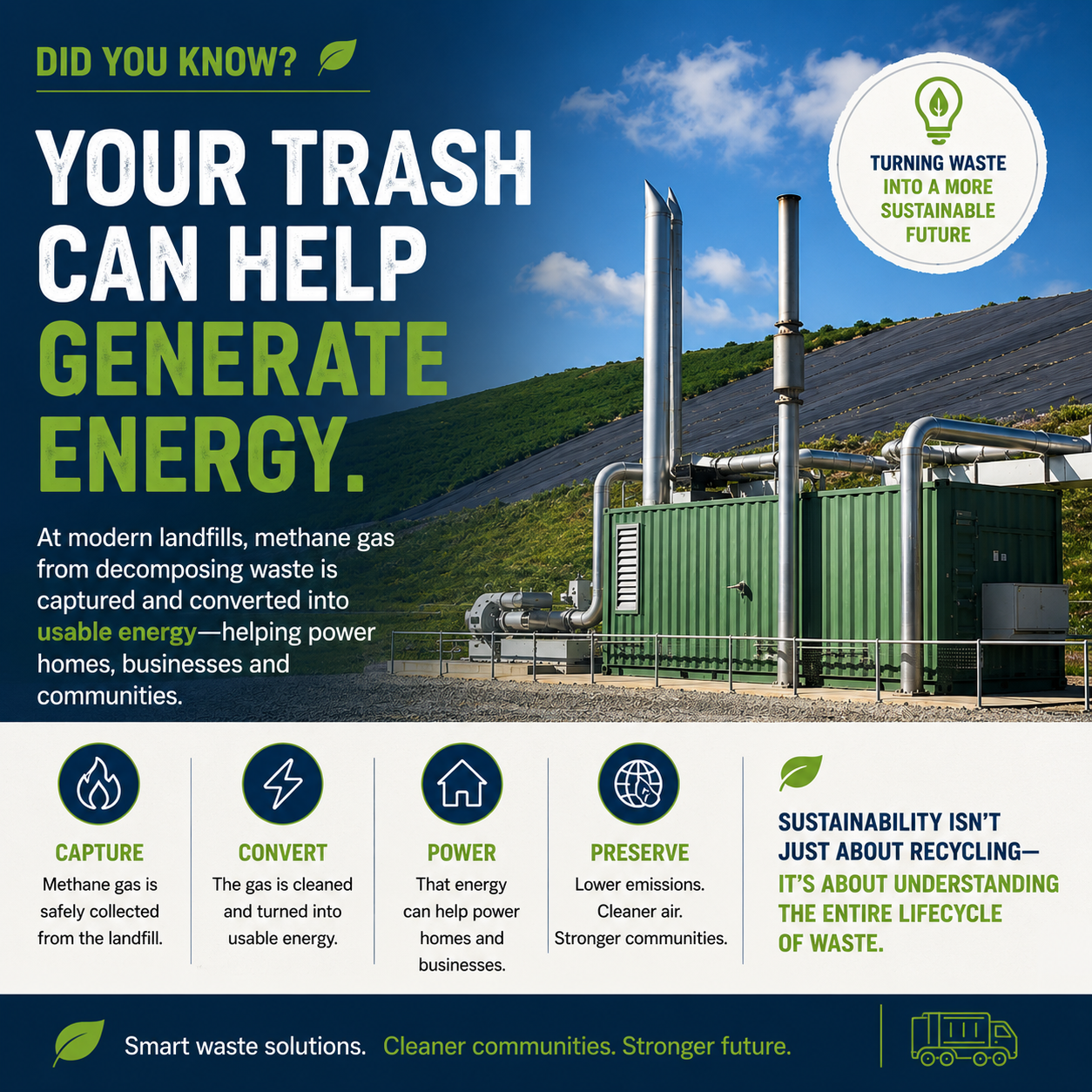
Did You Know Your Trash Can Help Generate Energy?
A look inside how waste to energy works—and why landfills are quietly becoming part of the sustainability solution.
What if the trash you throw away today could help power a building tomorrow? It sounds counterintuitive, but waste to energy is already doing exactly that. During a recent tour of a landfill and recycling facility, our team saw firsthand how modern waste management is turning yesterday’s disposal sites into part of a cleaner, smarter future.
For decades, a landfill was viewed as the end of the line—a place where waste simply disappeared from sight. Today, that thinking is changing fast. As the industry continues to innovate, landfills and recovery facilities are becoming engines of value, not just endpoints. Here’s what stood out most from the visit.
Waste to Energy: Turning Methane Into Power
One of the most surprising takeaways was learning how decomposing waste creates a usable resource. As organic material breaks down inside a landfill, it releases methane gas. Left unmanaged, that methane is a potent greenhouse gas. Captured correctly, it becomes fuel.
This is the heart of waste to energy: collecting landfill methane through a network of wells and piping, then converting it into electricity or heat. Rather than letting emissions escape into the atmosphere, modern facilities harness them—reducing environmental impact while generating power that can supply the grid, run on-site operations, or heat nearby homes and businesses.
Smarter Recycling Starts With Material Separation
Energy recovery is only one piece of the picture. We also learned how much proper recycling and material separation matter to the overall system. When materials are sorted correctly at the source, the value of what can be recovered rises significantly—and the volume sent to a landfill drops.
In other words, good separation does two jobs at once. It increases the worth of recovered metals, plastics, and paper, and it shrinks the footprint of what’s left behind. Contamination, on the other hand, drags the whole process down. A single improperly sorted load can lower the quality of an entire batch of recyclables.
It’s About the Entire Lifecycle of Waste
Perhaps the biggest shift in thinking is this: sustainability isn’t just about recycling more. It’s about understanding the entire lifecycle of waste—from the moment something is created, to how it’s used, to where it goes at the end of its life.
When you view waste as a system instead of a single action, smarter decisions follow naturally. You start asking better questions about packaging, separation, recovery, and disposal. And the more clearly that system is understood, the more opportunities emerge to capture value and reduce harm at every stage.
Waste isn’t the end of the line—it’s the start of one. When we capture methane and recover materials the right way, we turn what used to be a cost into real value for our customers and the environment.
RP Rich PerryPresident, Commercial Waste Division · Amergy Disposal
What Responsible Waste Handling Means for Your Facility
The same principles that make a landfill more sustainable apply to the waste your organization generates every day. Whether you operate a healthcare practice, a laboratory, a veterinary clinic, or a senior living community, how your waste is segregated, transported, and processed has a measurable impact—on compliance, on cost, and on the environment.
That’s why partnering with a disposal provider who treats waste as part of a larger system matters. Proper segregation keeps recoverable materials out of the landfill, supports safe and compliant handling of regulated medical waste, and reflects the kind of environmental responsibility your patients, clients, and community increasingly expect.
Ready to handle your waste more responsibly?
Amergy Disposal helps healthcare, dental, veterinary, and senior living facilities stay compliant while keeping sustainability front and center—from regulated medical waste to recycling and shredding.
Get a Free Quote